“The Vibhajan Vibhishika Smriti Nyas campus stands as a solemn testament to the millions who endured the horrors of the 1947 Partition of India — and as a beacon of hope, healing, and national unity for generations to come.”
Nestled in a serene and thoughtfully landscaped environment, the campus of Vibhajan Vibhishika Smriti Nyas is far more than a physical space — it is a living, breathing tribute to the resilience of the human spirit. Established in the sacred memory of the millions who were uprooted, violated, and lost during the tragic Partition of India in August 1947, this campus has been conceived as a sanctuary of remembrance, reflection, research, and reconciliation.
Spread across expansive grounds, the campus seamlessly integrates memorial architecture with educational infrastructure, cultural spaces, lush gardens, and community facilities. Every pathway, garden, building, and installation on this campus has been designed with a single unifying purpose: to ensure that the horrors of Partition are never forgotten, that the sacrifices of our ancestors are honoured with dignity, and that future generations are equipped with the wisdom to build a more united and compassionate India.
The campus receives visitors from across India and from more than 40 countries worldwide, welcoming students, researchers, diplomats, journalists, and ordinary citizens who come to learn, to grieve, and to renew their commitment to peace and justice. It stands as a model for memorial institutions across South Asia and has been recognised internationally as a site of outstanding historical and cultural significance.
People Displaced
Lives Lost
Year of Partition
Affected Peoples
The museum’s six permanent galleries take visitors on a carefully sequenced journey through the history of Partition — from the world that existed before division, through the catastrophic events of 1947, and into the long aftermath of displacement, rebuilding, and cultural memory. Each gallery is self-contained but connected, allowing visitors to experience the full arc of the Partition story.
Rare photographs, maps, and testimonies depicting shared culture across Punjab, Bengal, Sindh, and beyond.
Historical documents, newspaper archives, and political analysis charting the Mountbatten Plan and Radcliffe Line.
Audio-visual installations, personal objects, and the landmark Oral History Archive featuring 500+ survivor testimonies.
Evidence-based documentation of suffering, handled with utmost sensitivity to survivors and their families.
Stories of entrepreneurs, scholars, artists, and community leaders who rebuilt lives and communities.
Works by Manto, Amrita Pritam, Ismat Chughtai, and others — cinema, poetry, painting, sculpture.
The Nyas was founded with an unwavering commitment to preserve the collective memory of one of the most painful chapters in Indian history. The Partition of 1947 resulted in the displacement of an estimated 10–20 million people, the loss of over a million lives, and the permanent fracturing of families, cultures, and communities across what is now India, Pakistan, and Bangladesh.
The founding vision was guided by the belief that memory is not merely a relic of the past but a moral responsibility toward the future. By creating a dedicated campus where scholars, survivors, students, and citizens can gather, the Nyas transforms grief into purpose and pain into pedagogy. The founders envisioned an institution that would serve not only as an archive of suffering but as a living laboratory for reconciliation, inter-community dialogue, and the affirmation of shared humanity.
This vision has guided every aspect of the campus’s development — from the choice of materials and architectural forms, to the curation of exhibits, to the design of the educational programmes offered to thousands of visitors each year. It continues to inspire the Nyas’s ongoing work of documentation, scholarship, and community engagement.
The campus has been masterplanned with a harmonious blend of traditional Indian architectural principles and contemporary memorial design. Wide, tree-lined boulevards connect the various zones of the campus, while open-air amphitheatres, reflection pools, and sculptural installations punctuate the landscape with moments of quiet contemplation.
The built environment is deliberately open, welcoming, and accessible, reflecting the Nyas’s commitment to inclusivity and public engagement. Barrier-free design ensures that every area of the campus is accessible to visitors with physical disabilities. Signage is provided in six languages — Hindi, English, Punjabi, Urdu, Bengali, and Sindhi — reflecting the diversity of communities affected by the Partition.
Sustainability has been a core principle of the campus’s development. Buildings have been constructed using locally sourced materials where possible, and extensive use of natural light and ventilation reduces the campus’s energy footprint. A dedicated rainwater harvesting system supports the irrigation of the memorial gardens, and native tree species have been prioritised throughout the landscape design.
At the heart of the campus lies the Memorial Core — the spiritual and symbolic centre of the entire complex. This zone houses the Partition Memorial Monument, the Eternal Flame of Remembrance, the Wall of Names, and the Reflection Pool. The Memorial Core is a space for silence, prayer, and personal tribute, accessible at all hours of the day.
The design of the Memorial Core draws on the ancient Indian tradition of the sacred mandala — a centred, radially symmetrical space intended to orient the visitor inward, toward contemplation and inner stillness. The materials — white marble and red sandstone — echo the architectural vocabulary of India’s greatest memorial structures, grounding this modern institution in a deep historical and cultural continuity.
The Museum and Exhibition Zone features expansive galleries that document the Partition era through rare photographs, personal artefacts, oral history recordings, maps, official documents, and interactive digital installations. With over 5,000 original artefacts and 10,000 digitised photographs, this is one of the largest and most comprehensive collections of Partition-era materials in the world.
The zone is also home to a dedicated Children’s Gallery, designed to introduce younger visitors to the themes of displacement, resilience, and reconciliation through age-appropriate, visually engaging, and emotionally sensitive content. This gallery has been developed in close collaboration with child psychologists and educational specialists.
Dedicated to learning and scholarship, this zone houses the Research Library, Documentation Centre, Academic Seminar Halls, and the Digital Archive. It supports scholars pursuing advanced research on the history, sociology, literature, and human rights dimensions of the Partition era.
The zone also hosts the Nyas’s teacher training facilities and the Education Centre, which coordinates the institution’s school and college engagement programmes. A dedicated digital learning laboratory provides researchers and students with access to the Nyas’s extensive online archive and interactive historical databases.
This vibrant zone hosts the Open-Air Amphitheatre, Cultural Pavilions, and Exhibition Courtyards where theatre, music, storytelling, and artistic performances inspired by Partition narratives are regularly staged. It is a space where grief is transformed into art and where communities gather to heal together.
The Community Hall, located within this zone, serves as a gathering place for survivor associations, diaspora organisations, civil society groups, and support communities. Regular intergenerational dialogue sessions, reconciliation workshops, and community mental health programmes are hosted here throughout the year.
Recognising that healing requires not just knowledge but also peace, the Nyas has created a dedicated Nature Zone comprising memorial gardens, a meditation grove, water features, and quiet walking paths. The Garden of Resilience — featuring 1,947 trees representing the year of Partition — is the centrepiece of this zone.
The Healing Garden, at the eastern end of the campus, offers a tranquil refuge for visitors who find themselves overwhelmed by the emotional weight of the campus’s history. Trained wellbeing facilitators are available to provide support to visitors who need it, and regular guided meditation sessions are held in the Grove.
We invite you to walk these grounds, engage with this history, and carry its lessons forward into the world.
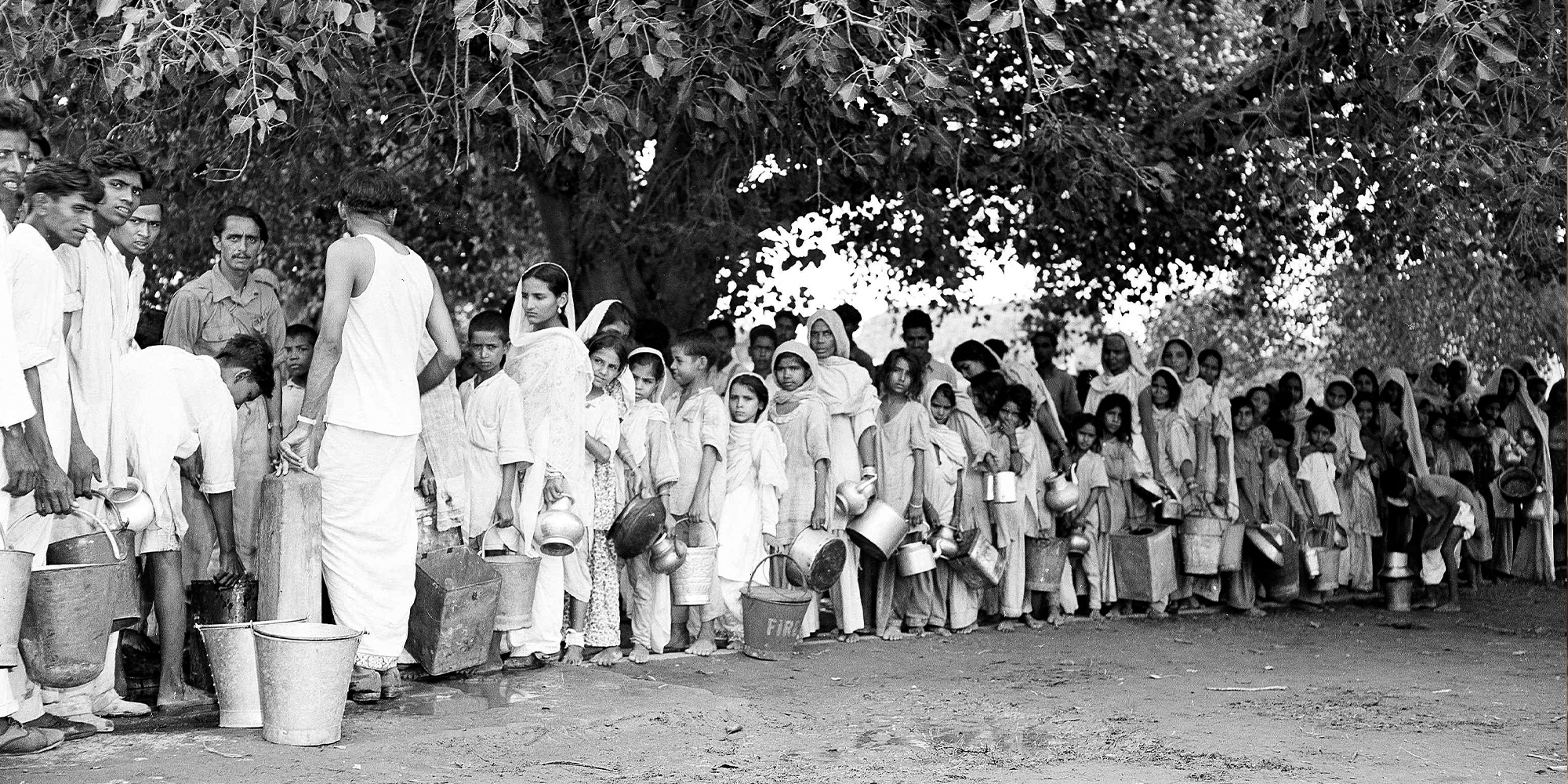
In 1947, the land of five rivers was divided. Millions were displaced. Centuries of shared culture, sacred shrines, and living heritage were torn apart overnight. Vibhajan Vibhishika Smriti Nyas is built so that nothing is forgotten.
Copyright © 2026 All Rights Reserved.