
Every word in our name carries the weight of history.
Together, the name declares our purpose: to remember what was lost, to honour those who suffered, and to hold that memory in trust for generations to come.
A living, evolving archive of undivided Punjab — a place where devotees can walk through history, participate in culture, and find spiritual stillness. Not a museum frozen in time, but an inhabited sanctuary that breathes with the culture it preserves.
To preserve the Sanjha — the shared — heritage of Punjab through architecture, landscape, ritual, oral history, arts, and interfaith spiritual spaces. To honour the 14–17 million people displaced in 1947, and the civilisational loss that accompanied their displacement.
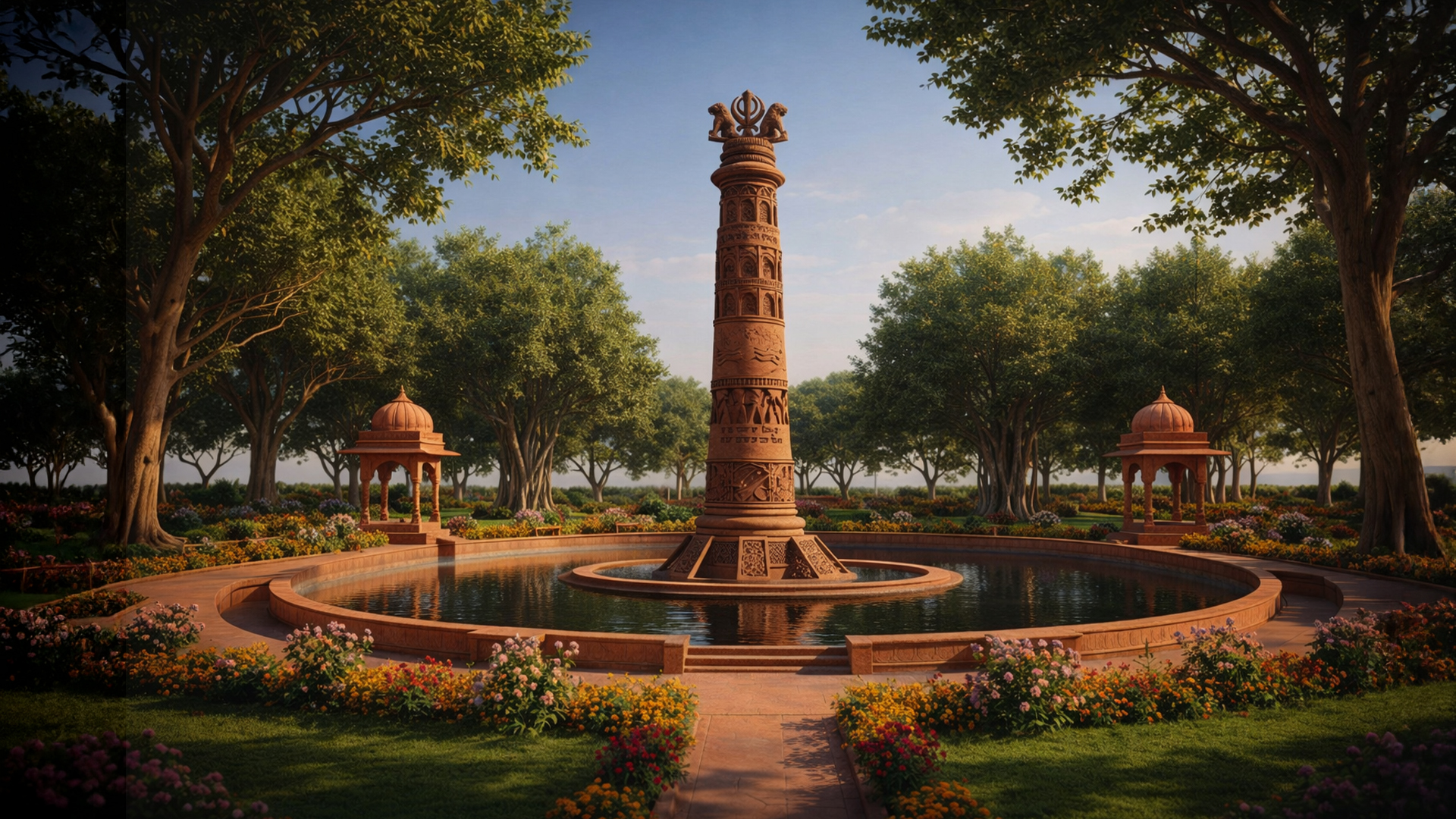
Architecture is not neutral here. Every material, every water channel, every courtyard and pathway is a deliberate act of cultural memory. The campus does not merely contain exhibits — it is itself an exhibit, a built argument for the richness of what was shared and the tragedy of what was divided.
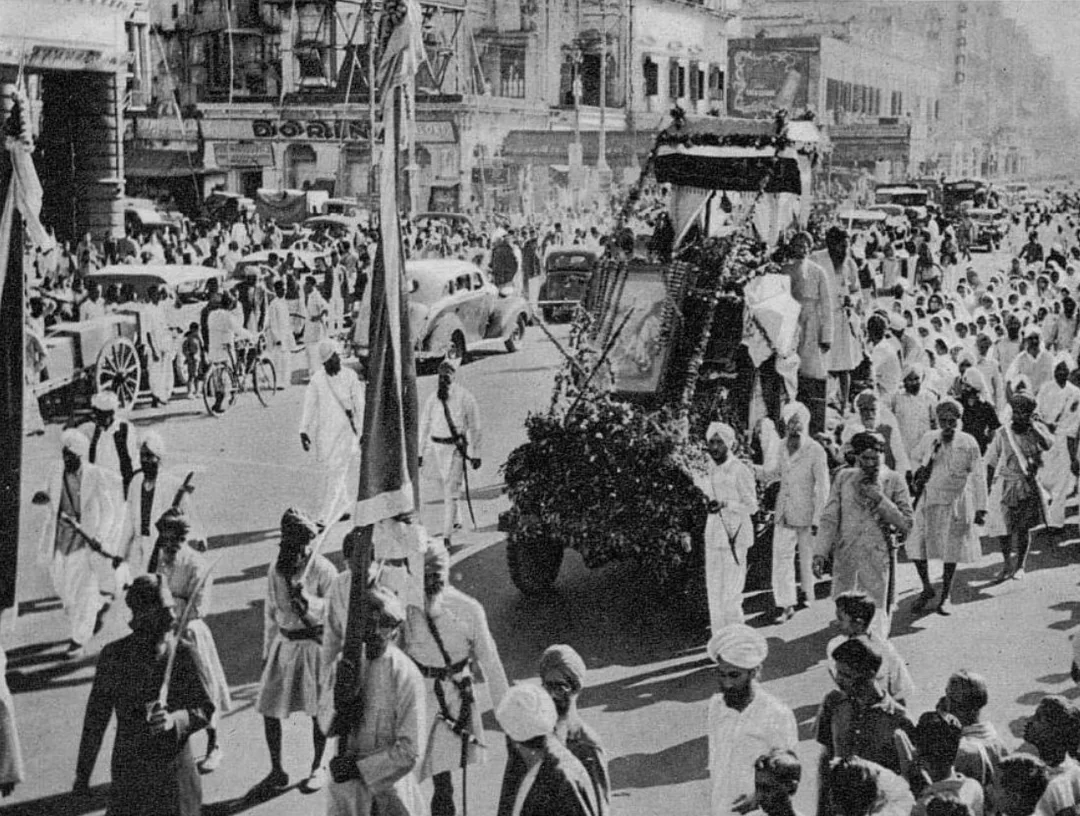
Sanjha is a Punjabi word meaning “shared” or “held in common.” It is the philosophical core of this project. The undivided Punjab was a land where Hindu, Sikh, and Muslim communities shared shrines, songs, festivals, trades, and neighbourhoods. Borders did not exist between devotional traditions; they were invented by political circumstance.
The Nyas uses the undivided map of Punjab as its central recurring motif — not as a political statement, but as a reminder of what once was, and what survives in memory, music, craft, and spirit. Every gallery, every temple, every orchard and waterway is shaped by this idea: that what is shared is always larger than what divides.
The site at Panj Darya — “Five Rivers” — was chosen with intention. Its name echoes the five rivers of undivided Punjab (Jhelum, Chenab, Ravi, Beas, Sutlej) that gave that land its identity and its name. Nestled in the foothills of Uttarakhand, it offers the stillness, the green landscape, and the natural water presence that the vision demands.
The campus is designed for a 32–33 acre site. Ground coverage is kept deliberately low (28–32%) and building height is limited to G+1, allowing the landscape, water, and sky to dominate the experience. This is a campus that belongs to the land, not one that overwhelms it.
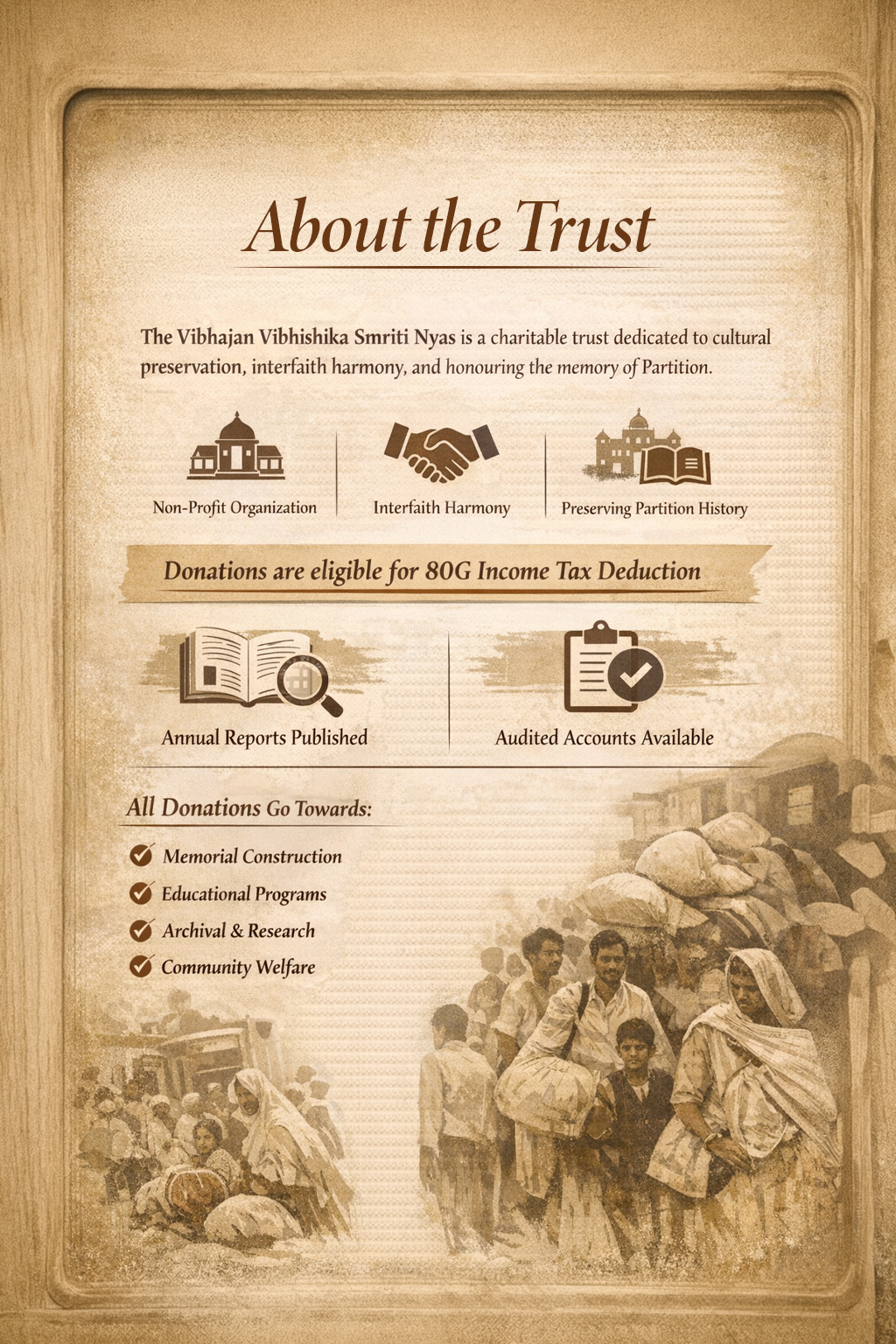
The Vibhajan Vibhishika Smriti Nyas is a registered charitable trust governed by a board of trustees who share a commitment to cultural preservation, interfaith harmony, and the honouring of Partition memory. The trust operates on a non-profit basis. All funds received are directed toward construction, programming, archival work, and community welfare.
Donations are eligible for 80G income tax deduction. Annual reports and audited accounts are published on this website.

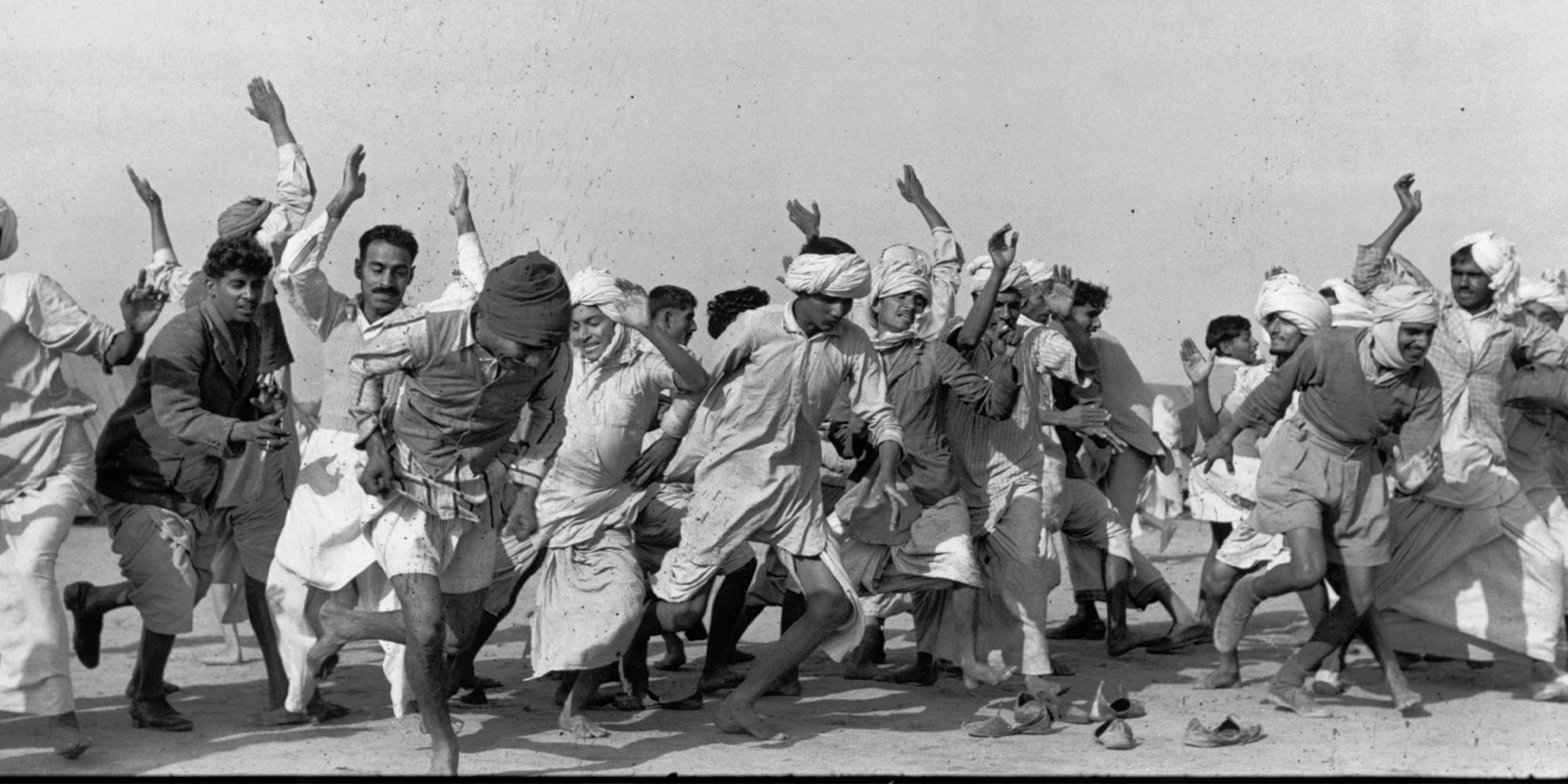
In 1947, the land of five rivers was divided. Millions were displaced. Centuries of shared culture, sacred shrines, and living heritage were torn apart overnight. Vibhajan Vibhishika Smriti Nyas is built so that nothing is forgotten.
Copyright © 2026 All Rights Reserved.